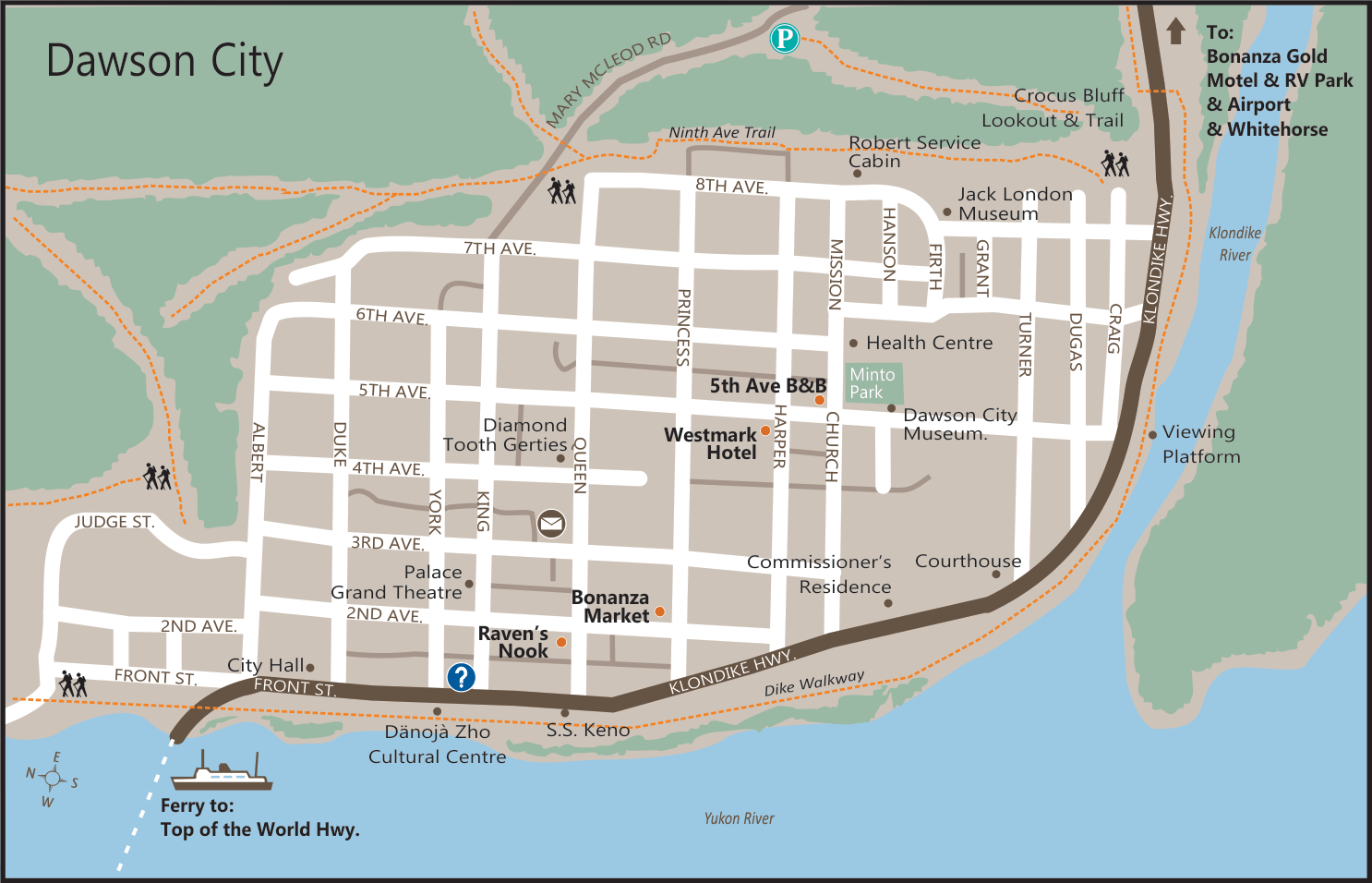


Dawson City Yukon was the site of the famous Klondike Gold Rush in 1898. This fascinating gold rush history, makes it one of the most interesting towns to visit in the Yukon or Alaska.
Dawson City is also part of the Tr’ondëk-Klondike UNESCO World Heritage Site, announced in September 2023. The Klondike Gold Rush in the late 1800s only lasted a few short years, but it’s legacy and impact on this region and it’s indigenous people lives on. This UNESCO Heritage site includes eight unique sties in the region that reflects Tr’ondëk Hwëch’in peoples’ experience and adaptation to European colonialism during the gold rush and beyond.
More than a Century later, gold mining remains an economic mainstay and has produced close to 14 million ounces of gold in the past 120 years. More recently, tourism has become the main economic driver in this gold rush town and in 2023, Dawson City was chosen by Frommer’s Travel Guide as “One of the best places to go” in the World.”
If you want to plan your own custom Itinerary on the Klondike or Top of the World Highway, try our Free Travel Planner.
Select “Routes TO Alaska” and then select “The Klondike Highway Loop” or “The Top of the World Highway” to get a complete list of accommodations and activities that match your interests.
Dawson City grew up in the shadow of a scar-faced mountain called Midnight Dome. Here on the flats of two Klondike rivers (The Klondike & The Yukon) was a city of mud streets, churches, saloons, casinos and theatres. Thirty thousand prospectors and miners, entrepreneurs, bankers, gamblers, prostitutes and con artists from every corner of the continent came across snow-covered mountain passes and down the Yukon River to claim their fortune in the Klondike.
Most who made the journey found no gold at all. But the hope of striking it rich was not all that mattered. For many of those who made the incredible expedition, the Klondike represented an escape from everyday life and adventure in a new frontier. White Pass & Yukon steamers were typically berthed at riverside docks bringing a steady stream of people and supplies. These beautiful boats were part of a fleet of 250 paddlewheelers on the Yukon River.
The Klondike Gold Rush had a major impact on the local First Nations, The Tr’ondëk Hwëch’in people. They inhabited the land around the Yukon, Stewart and Klondike River for several thousand years and were one of the few Yukon tribes to develop permanent villages in the Yukon. Today, they are concentrated in Dawson City. The Dänojà Zho Cultural Center shares the history and culture of the Tr’ondëk Hwëch’in people.
Unlike many gold camps, Dawson was never swept aside or buried in the onrush of civilization. When its dream was over, the town still stood.
Many of the old landmarks disappeared one by one in disasters such as fire or the callousness of man. But what remains provides a unique travel experience for those with a sense of history and adventure.
Some of the old landmarks, like the Palace Grand theatre, have been reconstructed. Others, such as the Old Post Office, have been restored, since many sites in Dawson City have been designated of National Historic significance by the Canadian government. Restoration and maintenance of numerous gold rush buildings and at least one mining complex is being carried out by Parks Canada.
Some of the town’s firms like the Canadian Imperial Bank of Commerce, have opened their doors every business day for almost a century. In the bank, gold still is weighed and handled here, but not in the same quantities as it was when Dawson reveled in her prime.
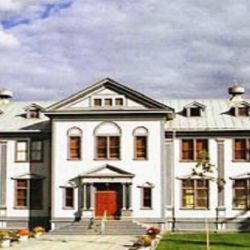
Dawson City Yukon is host to a decade of centennials and anniversaries. A potpourri of cultural events take place during the annual Discovery Days Festival, which celebrates the Discovery of Gold in 1896. Visit the Commissioner’s Residence and the Boyhood Home of Pierre Berton. The Yukon Gold Panning Championships are hosted on July 1st and Goldpanners attend from around the world and compete in various panning categories.
For travellers headed north from Dawson to Inuvik or Tuktoyaktuk, take the Dempster Highway, 40 km east of Dawson City on the Klondike Highway. To get from Dawson City to Alaska, take the Top of the World Highway.”
Tr’ondëk-Klondike UNESCO World Heritage Site
Designated a UNESCO World Heritage site in 2023, for its representation of the Tr’ondëk Hwëch’in First Nation people’s adaptation to unprecedented changes caused by the Klondike Gold Rush.
There are eight sights that comprise the UNESCO World Heritage Site.
- Dawson City
- Fort Reliance
- Forty Mile (Ch’ëdähdëk)
- Moosehide Village (Jëjik Dhä Dënezhu Kek’it)
- Black City (Jëjik Dhä Tthe Zra’y Kek’it)
- Dënezhu Graveyard (Ch’ëdähdëk Tth’än K’et)
- Fort Cudahy and Fort Constantine;
- Tr’ochëk
These eight locations tell the story of how the Tr’ondëk Hwëch’in First Nation’s way of life was impacted by colonialism from 1874 to 1908. Taken together, the historical site traces a timeline of First Nation and settler activity and occupation in the region. The series of sites includes sites of exchange between the Indigenous people and the colonists, and sites demonstrating the Tr’ondëk Hwëch’in’s adaptations to colonial presence.